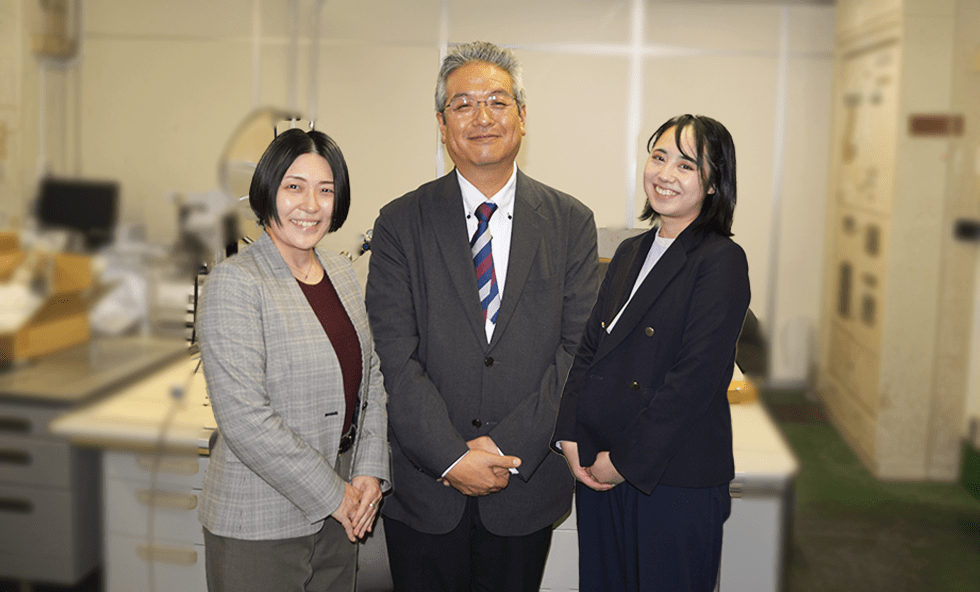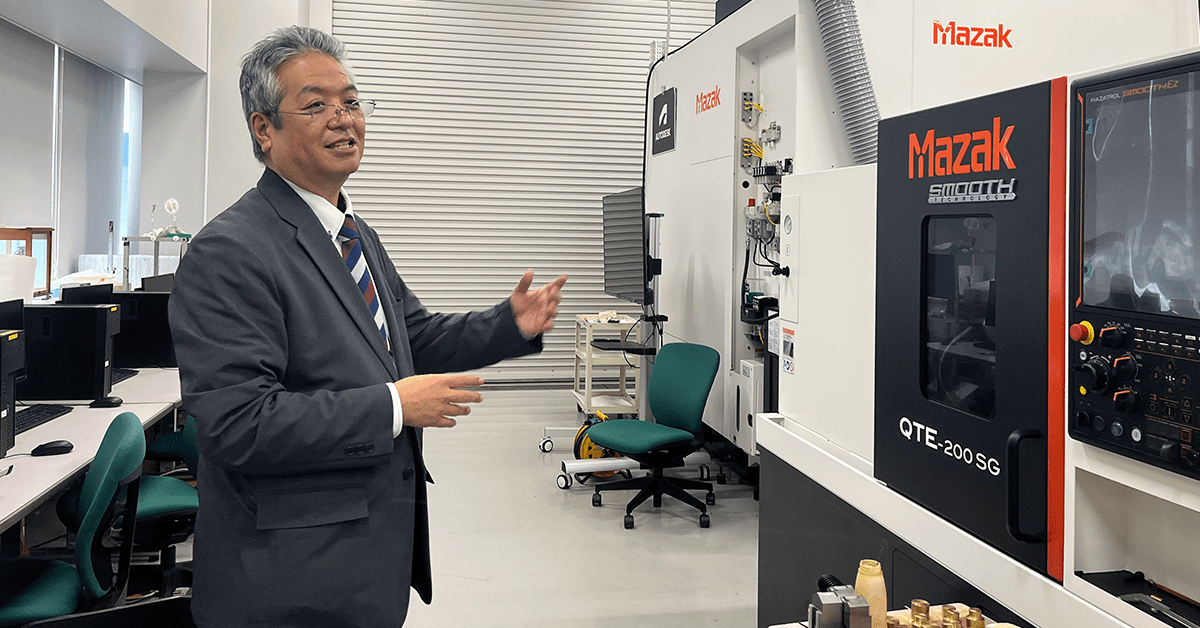
Biomass plastic is a material made from plant-based raw materials. It has gained attention because of its potential to reduce environmental impact, and its use in everyday items, such as plastic shopping bags and food containers, is rapidly expanding. However, its adoption for durable mechanical parts is still in its early stages. Prof. Nishitani of the Polymeric Materials Lab at Kogakuin University is taking on the challenge of developing mechanical parts using composite materials formulated with 100% biomass plastics from a mechanical engineering perspective.
Yosuke Nishitani
He worked in the design, development, and research of sealing products and materials at a company until 2006. Returning to his alma mater, he is now a professor in the Department of Mechanical Engineering at Kogakuin University, where he conducts research at the Polymeric Materials Lab. His work centers on polymer materials and composite materials for mechanical applications, examining areas such as molding and processing, tribology, and mechanical properties from a distinct mechanical engineering perspective.
✔Why is there a demand for a new type of plastics now?
Starlite(S):Even though your field is mechanical engineering, the name “Polymeric Materials Lab” sounds a bit more like a chemistry lab.
Nishitani(N):Yes, it is actually something we hear frequently. We believe that polymeric materials can be put to even greater use in society if we develop them with a focus on how they will actually be used and how they will contribute to machinery, instead of simply molding polymeric materials (plastics) into specific shapes. That is why we need a Polymeric Materials Lab from a mechanical engineering perspective.
S:So, your research is based on real-world situations. Could you tell us why you chose to research biomass plastics?
N:As environmental issues like fossil fuel depletion and CO₂ emissions intensify, development is rapidly advancing for high-performance biomass plastics made from plant-based materials that absorb CO₂ as they grow. It is because I want to get the most out of those new materials. Through the joint research with Starlite, we are working to develop materials for mechanical components based on plant-derived polyamides, with enhanced friction and wear properties as well as mechanical strength. We are currently investigating material modification techniques, such as radiation-induced cross-linking, to facilitate the application of this technology to long-life components like gears, bearings, and seals.
✔Why collaborate with companies?
S:I was amazed by the equipment in the lab that supports the entire process from materials development to molding and evaluation. It is just like the development facilities at Starlite.
N:The performance of materials varies significantly depending on how they are made, including how they are mixed and molded. To fully trace the history, we are building an environment where we can manage the entire process in-house as much as possible.
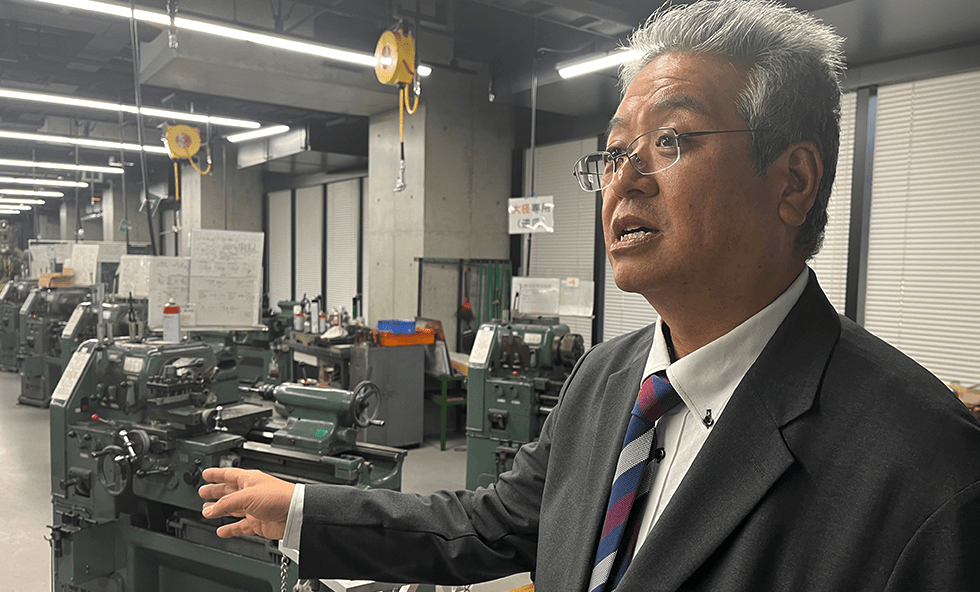
S:Given how well-equipped the lab is, it seems like the entire development process could be completed here. Still, what made you decide to collaborate with a company like ours?
N:We can independently handle specific tasks, but commercializing a product ultimately requires close collaboration with industry partners. Companies possess a deeper understanding of actual usage conditions and product specification information. I think practical experience in the market is necessary to understand key insights regarding mass production and quality.
Starlite has many years of experience in mass production of mechanical parts and has extensive expertise in manufacturing and testing. It is a real advantage that we can discuss not only material properties but also the identification of challenges for practical implementation, and friction and wear evaluation. Perspectives such as how these parts will actually be used in machinery and which properties should be prioritized cannot be fully understood without working closely with companies.
S:By combining research with market experience, we can get closer to creating products that people use.
N:Our research may be in an area slightly ahead of its time, focusing on technologies that may be too early for commercial investment today, but I believe it will become vital tomorrow. For companies, this opens up future possibilities, and for universities, it allows them to conduct research with practical applications in mind. That is why I think there is great value in working together.
✔Nurture people through research.
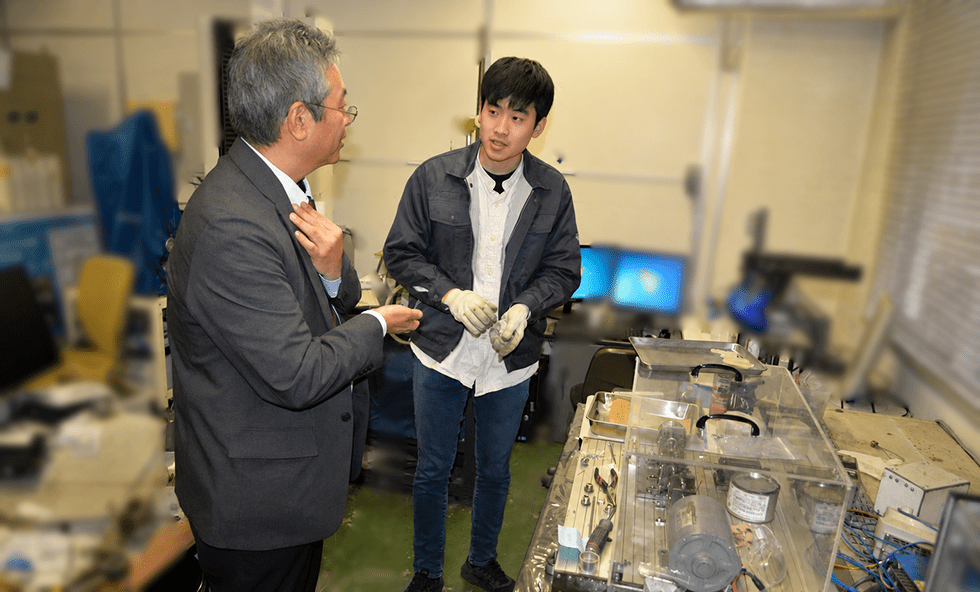
S:It seems like it is very rewarding for students to be able to go beyond simply developing materials and think about what comes next. I think it is rare to find an environment where they can experience the whole process at one place.
N:After all, if they do not understand the purpose of their task, it will feel like a chore that they are forced to perform, and their motivation will not last. That is why we ensure every project goes all the way to product development and testing, allowing students to see the meaning in their work. There is a world of difference between simply knowing something from textbooks and research papers and actually having the experience of doing it yourself. That practical experience will prove invaluable once students enter the workforce.
S:What do you consider most important when working with students through research?
N:I want them to feel free to pursue whatever they want to do. However, since it is often difficult for students to think independently right from the start, I provide a specific topic to help them discover what they are capable of achieving. As I gradually increase the amount of independent thinking required, more students are taking the initiative on their own. I realize that students today can no longer learn simply by observing from a distance or copying techniques as we did. We must adapt our teaching methods to keep up with the times.
S:Gaining experience through success is surely very important.
N:Yes. As they progress in their research, once they begin to see the entire manufacturing process as a connected whole, they will start to think for themselves. When that happens, they will naturally find themselves taking the initiative and finding genuine enjoyment in their work. For example, a student who was working on a joint research project with Starlite received an award at an academic conference. The experience of sharing their research findings with the outside world and receiving recognition for them gives students a great deal of confidence. Recently, it has become more common for former students working in the manufacturing sector to approach me after graduation, asking to collaborate on research. As a researcher myself, nothing gives me greater joy.
✔Work together to develop 100% biomass plastic materials that serve society's needs.
S:Could you share your goals for the joint development project with Starlite?
N:Although biomass plastics are currently used primarily in everyday items, there is a growing trend of combining them with petroleum-based plastics in applications for functional parts that require mechanical properties such as durability. However, we are challenging ourselves to develop mechanical parts using composite materials formulated with 100% biomass plastics. In fact, radiation-induced cross-linking has been confirmed to improve the wear resistance and limit PV value (a key indicator of friction tolerance) of PA1010, suggesting that biomass plastics hold strong potential for use in durable components.
However, since biomass plastics are still a relatively new material, there are challenges such as production costs and ensuring consistent quality during mass production. Therefore, it is essential to engage in thorough discussions with Starlite so we can tackle those challenges one by one. I hope we can build a society where the materials we develop are widely adopted as products, and where these cumulative efforts lead to a reduction in environmental impact.