
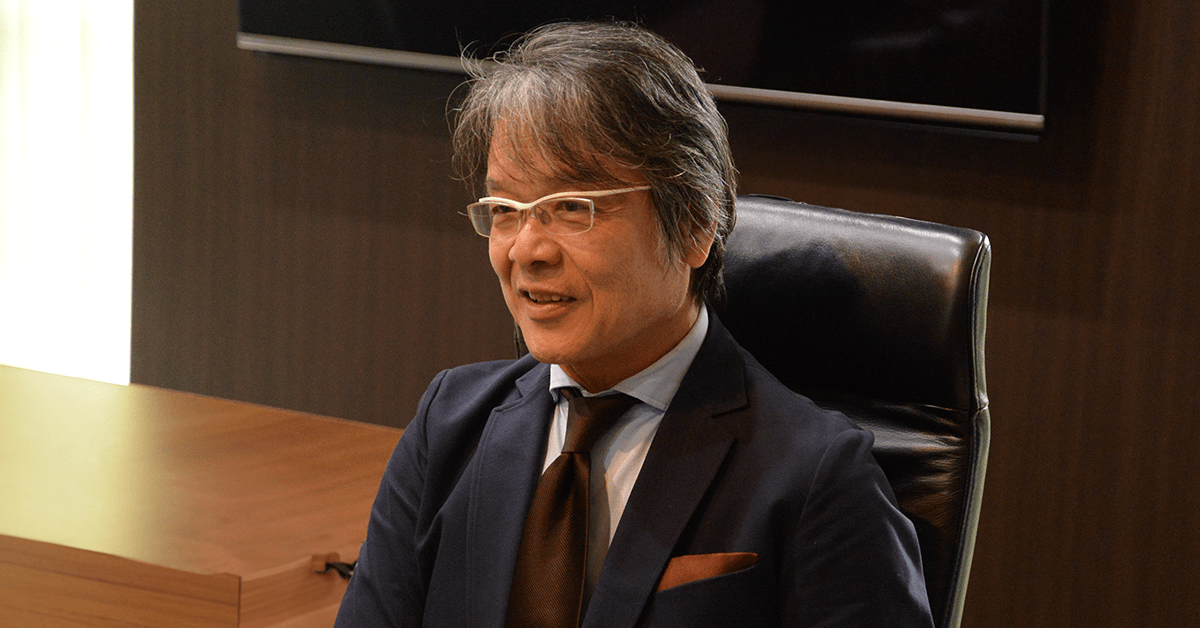
A gentle gaze behind white-rimmed glasses. Hidetoshi Kudo, who was involved in numerous development projects at Mazda, now envisions the future of mobility as Mikuni’s CTO. Contrary to our image of engineers as cool and dry, his manner of speaking is surprisingly gentle, given his background. What is the essence of technology and people that can be cultivated through collaborations, based on experience across various areas of the value chain, in addition to research and development? I asked him about Mikuni’s vision for the future and the messages for the next generation of engineers.
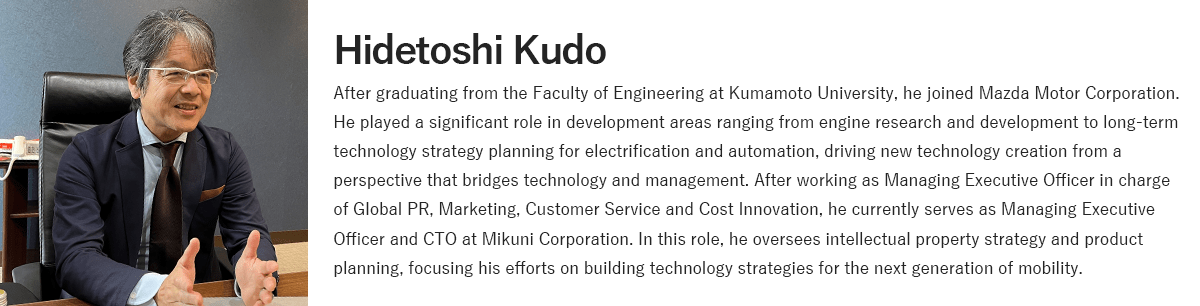
He continues to stand at the forefront of change as an engineer who has witnessed the changing of the times.
K:As engineers, it is our job to find the next solution when faced with changes. In an uncertain world, predictions are impossible. Based on that premise, I emphasize that these four perspectives are important: 1: Setting ideals, 2: Making own predictions, 3: Having system’s perspective, 4: Having end-users’ perspective. With these perspectives, I believe we can adapt to any era and any field beyond research and development.
K:Yes. Ultimately, the value of technology lies in the people who use it. Technology only truly comes alive when it is used in society and daily life. Both companies and society must return to that idea. There is a term called “industry-academia-government”, and among these three communities, the only one that can generate profits is industry, that is, companies. If companies do not do their part, neither the economy nor the job market will function properly. That is precisely why I want every engineer to take pride in the fact that they are building the future.
Honing your skills is like honing the power to believe in the future.
K:I agree. When starting something new, it is important not to try to build everything from scratch. By organizing and combining our own technologies and strengths and filling the missing fields with internal and external resources, we can envision a bright future for the company. This approach allows us to value our history and brand while moving forward.
K:Exactly. That is why I have set the slogan, “Make money through technology.” It might sound a bit provocative, but it is simple. Only engineers can transform technology into value and value into compensation. Those who can create this cycle “Technology → Value → Profit” are what we expect from engineers going forward.
K:Technology can only be born from people trusting one another. Believe in the future, take action, trust your team and technology, and refine your skills. What I would like to say to engineers is the power to act with belief.
Trusting and delegating to others.
K:People often feel the need to control others, believing that they are doing so for the benefit of those they control. They micromanage because they think people will slack off if they are left alone. But, in reality, delegating leads to better growth. If you just show them the direction, people will take responsibility and get the job done. My philosophy is that they can do whatever they want within certain boundaries. I trust them and let them find their own way. Then, they start thinking and taking initiatives.
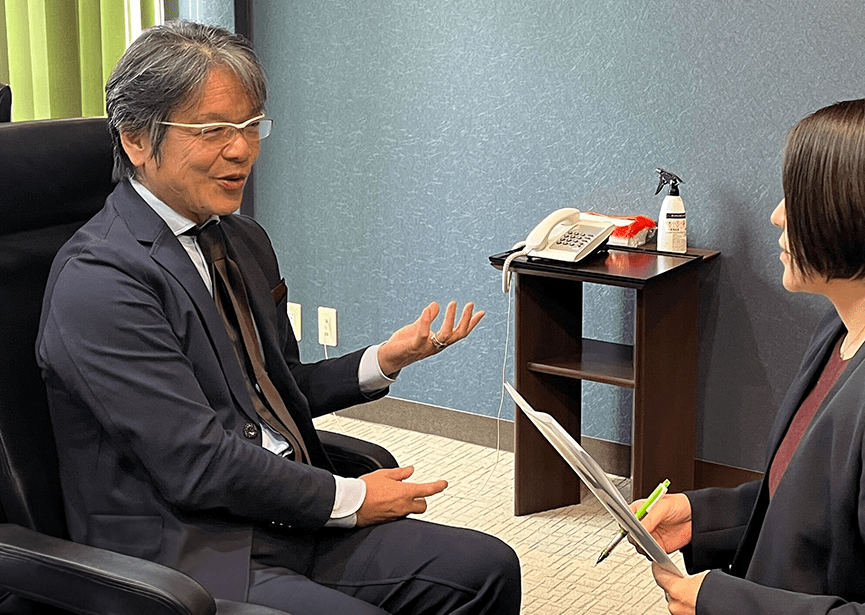
S:I feel that applies to raising children as well.

When people's aspirations come together, technology springs into action.
K:Exactly. Collaboration is not just about working together. It is about trusting each other’s strengths and perspectives while sharing a vision for the future.
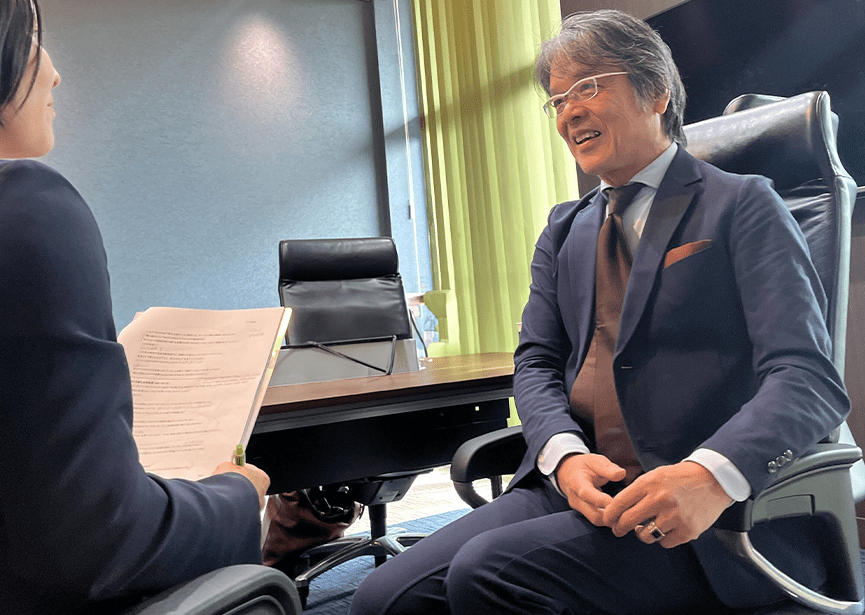
K:Yes, when people’s aspirations come together, technology springs into action. True collaboration does not happen in conference rooms discussing concepts, but it happens when we stand before an actual product in the field and debate. Materials, design, control, testing—all these elements come to use only through connections with people in other fields. As CTO, I focus most on how to connect them.
K:I think so. No matter how excellent individual skills may be, they will not create new value unless they are connected. Mikuni provides excellent products and technologies. However, if people do not work together, there will be no progress. If each engineer thinks about how and where they can use their strengths and connect with internal and external resources, I am sure innovative technologies will emerge.
K:Yes. Both technology and organizations can only grow when people trust each other. I felt this through our collaboration with Starlite. That is precisely why I believe that management based on “trusting and delegating” and collaboration based on “trusting and creating together” share the same roots.
Do not be afraid of change and envision your own ideal.
S:Listening to what you have shared so far, I feel that at the core of both technology and organization lies the power of belief. If you have any words of wisdom for the next generation of engineers, please share them with us.
You do not have to aim for perfection. In an uncertain world, it is impossible to predict everything. Even so, we can still hold our ideals and envision our future with our own power. That very power to envision is what drives technology and moves society forward.
The essence of an engineer is not manufacturing things but envisioning ideals and persistently challenging them. Having an ideal provides a foundation that we can always return to when we have second thoughts. After all, only humans can advance technology. That is precisely why I hope the future is not something decided by someone else, but something we shape with our own hands.
🔗Related Links