
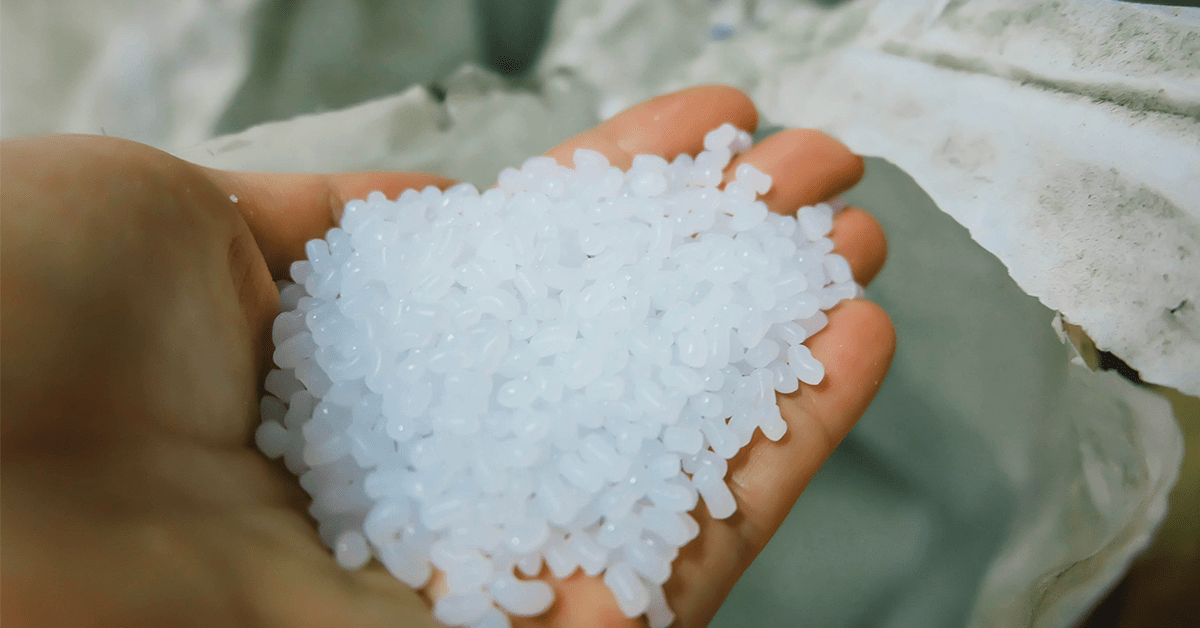
Plastic is formed when long, string-like molecules tangle together.
Plastic clings tightly together when cold, but as the temperature rises, it gradually loosens and eventually becomes liquid enough to flow. The melted plastic is poured into a mold, cooled, and solidified to form the product (this is the molding process for thermoplastic resins). But it is not as simple as just pouring melted resin into a mold. The catch to plastic molding is shrinkage.
For example, suppose you melted plastic in a pot and poured it into a cold aluminum ice cube tray to make cubes. Then, an irregular cube with a dented center and sharp corners came out. The dent occurs due to resin shrinkage caused by temperature changes (the resin shrinks significantly as it cools). The thermal expansion and shrinkage can also be found in our everyday lives. For example,
- Have you ever noticed that bicycle tires were filled with air in the summertime without pumping them up, but felt soft in the winter?
- Then again, you might overinflate the tires in the spring, only to find them flat in the summer after temperatures soar past 40 °C and the air expands.
Plastics are not as sensitive as gases, but they are still sensitive to temperature changes. This is why simply pouring them in will not give us the desired shape. If you are wondering what to do, just contact us. Starlite has engineers who know the properties of resin inside and out. We will work with you to explore how to achieve your desired shape from the perspectives of design, molds, and molding.