
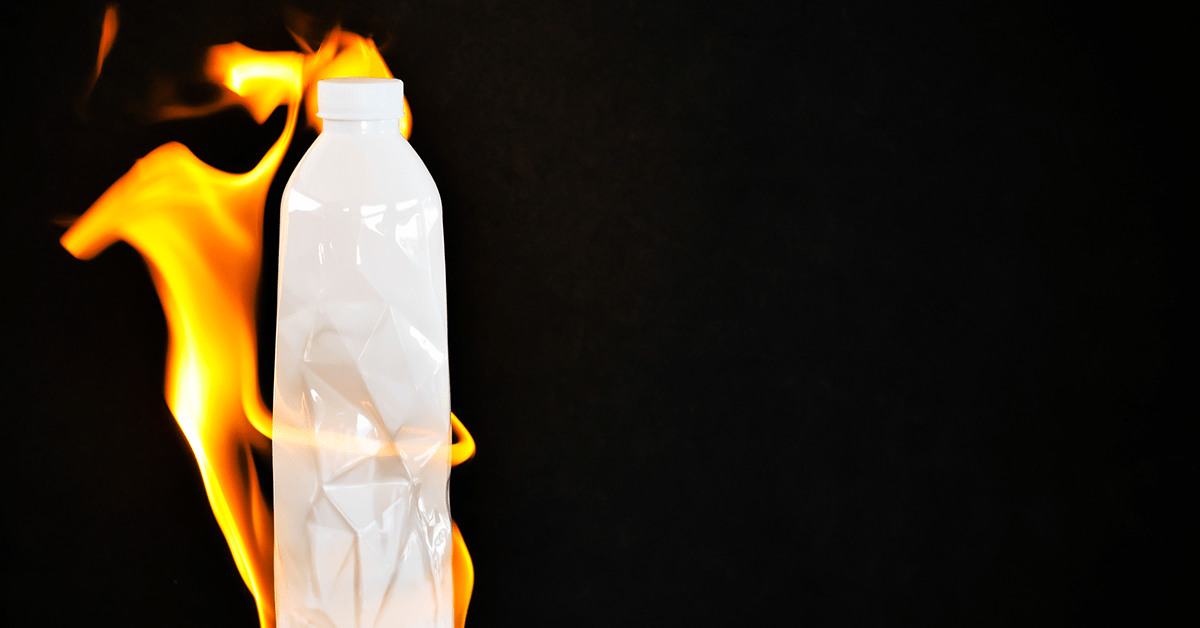
Plastic is made from petroleum. When you think of petroleum, you think it is flammable.
For example, materials like polyethylene (PE) and polypropylene (PP) have a structure similar to a candle, which is why they burn well when ignited. PP, in particular, is an inexpensive and easy-to-handle resin commonly used in transparent containers and daily necessities found at 100-yen stores.
However, because it has the characteristic of being highly flammable, it is necessary to add flame retardants to make it less flammable. What exactly do we mean by “flammable” or “nonflammable”? In fact, the definition of flame resistance varies significantly depending on the industry and application. For example…
Plastic that extinguishes instantly no matter how many times you light it
Plastic that does not burn out immediately after burned
Both are sometimes referred to as flame-resistant. It depends not only on the performance enhanced by flame retardants, but also significantly on the material’s shape and structure. Although chemical fibers such as polyester burn slowly in bulk form, they may ignite instantly once they are woven into fabric. In fact, fire resistance depends not only on the material itself, but also on how it is used.
The key is to understand why that performance is required. Once we understand that, we may be able to achieve the required performance even with low-spec materials by devising the shape and structure of the product.
Starlite does not give up just because of material specifications but gets creative with shape and design.
I really wanted to continue with the series, and my wish has come true. It continues into vol. 2.
👉Plastic Experts Share Their Little Stories (Vol. 2): Plastic Is a Bundle of Strings.